
Seoul crowd crush: How tragedy unfolded in Itaewon
Seoul crowd crush: How tragedy unfolded in Itaewon
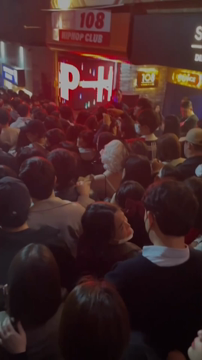
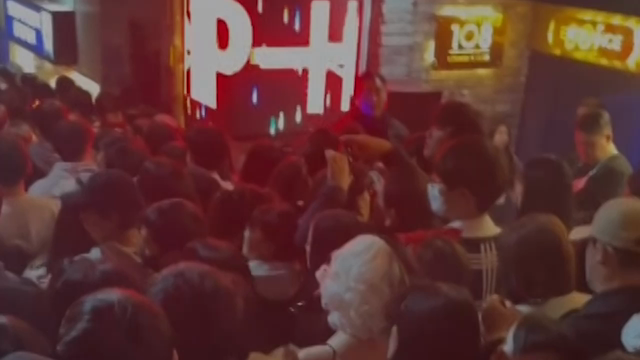
One particularly narrow and sloping alley, next to Hamilton Hotel, was already packed wall to wall.
But people at the top of the alleyway continued pouring in.
And then people began to fall.
"There were people on top of people - it was layers of people. They didn't have enough people there to help them at once."
Taylor and two other off-duty soldiers, Dane Beathard and Jerome Augusta, were among those who tried to help.
"All of the people crushed were in the front, where they collapsed into a pile," Beathard said. He added that at the worst points, it was "a fifteen-foot layer of people".
"It's hard to put in words to describe," he added.
"So many victims' faces were pale. I could not catch their pulse or breath and many of them had a bloody nose.
"When I tried CPR, I also pumped blood out of their mouths."
As many as 100,000 people, mostly in their teens and 20s, turned up for the Halloween festivities.
Police said they deployed 137 officers to Itaewon for Halloween, while sending 6,500 to a protest across town.
South Korea's police chief has acknowledged that officers received multiple urgent reports of danger ahead of the crowd crush in Itaewon, and that their handling of the information was "insufficient".
Experts speaking to CNA noted that the crowd was so densely packed in the 4m-wide alley that any slight movement at its fringes could have caused the whole crowd to collapse.
“Unfortunately, under those circumstances, as the crowd falls over, people then try to get up, arms and legs get twisted together,” said Keith Still, visiting professor at the University of Suffolk, who has more than 30 years of experience in crowd safety and crowd risk analysis.
They explained that what happened in Itaewon should not be described as a stampede, as that implies that there was space available for people to move.
"When the crowd reaches that level of critical density, no individual in the crowd is essentially in charge of their actions or their movements," said Dr Milad Haghani of University of New South Wales in Australia.
"No person can decide where to go or how to react."
On the question of what South Korean authorities should focus on in their investigations, Prof Still noted that the size of the Itaewon alley, the flow rate through the area, the maximum limits, and the fact that there is a train station in the area are known parameters.
“You can therefore work out what the safety elements are before you allow the crowds into that space. So that, I think, would be your fundamental analysis - understanding the areas and then look at who's responsible for the safety of the public,” he said.
“Is this (on the) local authorities? Who's the landowner in these areas? What is the legislation for public safety within this environment? These are all key questions you would ask in an inquiry.”
Videos
AP
CNS via AP
Photos
AFP
Interactive Design
CALVIN OH
Executive Producer
DAWN TEO
Listen to the podcast: